What Is Machine Learning? A Plain-English Explanation
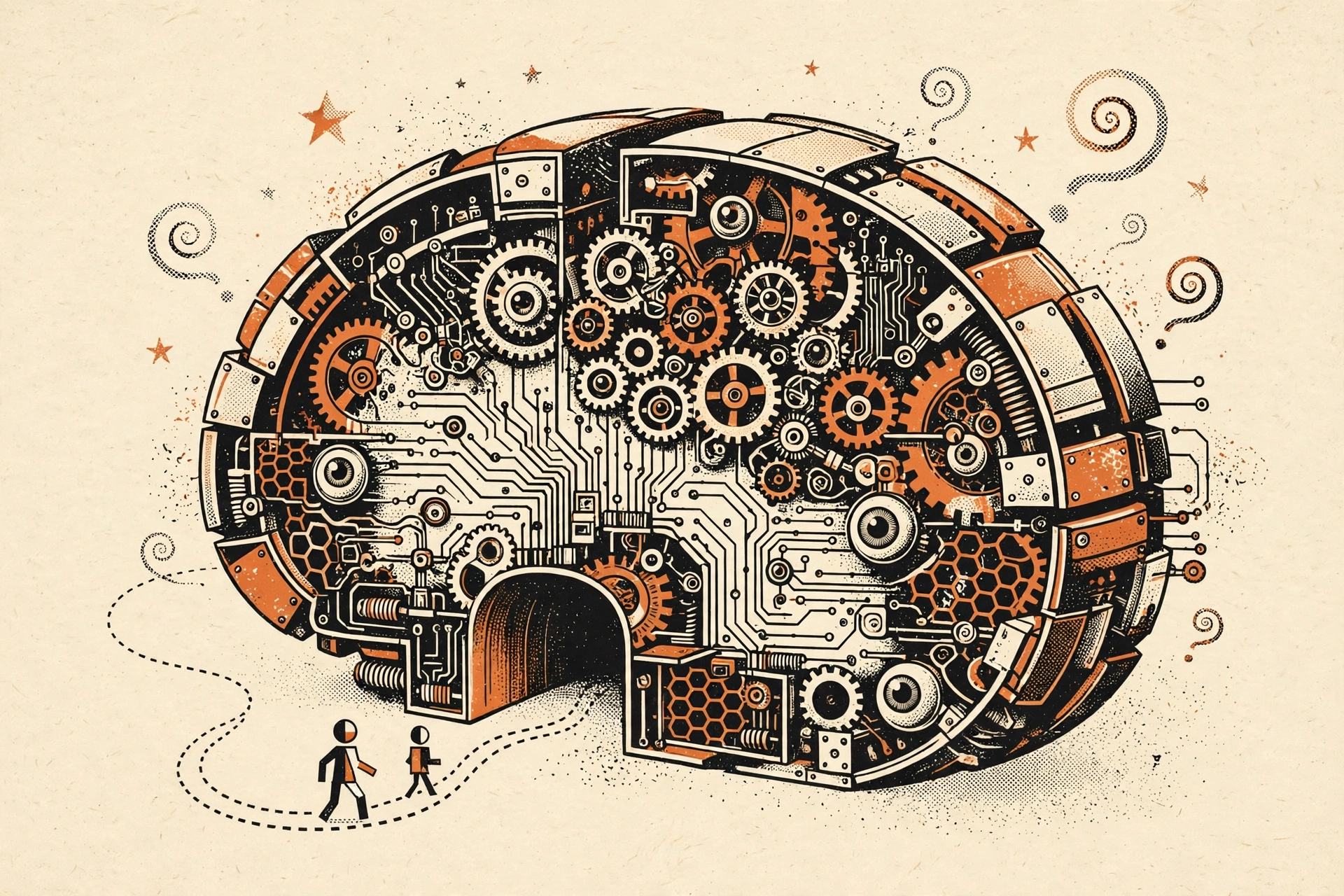
Machines learn the way apprentices do: watch, try, correct, repeat.
“Machine learning” sounds like a subject that needs a PhD. It doesn’t. At its heart it’s a lens on how we teach machines to do things we can’t write rules for — recognizing faces, translating sentences, predicting what you’ll want to watch next.
The one-paragraph version
Machine learning means training a computer on lots of examples so it develops its own rules for deciding. Instead of a programmer writing “a dog looks like X,” the machine is shown ten million dog photos and works out what makes a dog a dog — figuring the rules itself, the way a child learns to recognize dogs by just seeing them.
Teaching by example
Here’s a mental model: think of machine learning as an apprentice. You show the apprentice thousands of examples, each labeled. The apprentice guesses, gets corrected, adjusts, and tries again. After enough tries, it gets good — sometimes very good — at the pattern. The program it develops lives as millions or billions of numbers (called weights), which collectively encode its hard-won guesses about the world.
The three main flavors
1. Supervised learning — teaching with answers
Examples plus correct labels: photos labeled “cat” or “dog,” emails labeled “spam” or “not spam.” The machine learns by checking its guesses against the labels. This is the workhorse behind image recognition, translation, and speech-to-text.
2. Unsupervised learning — finding patterns alone
Just examples, no labels: the machine groups and structures them by itself. This is behind customer segmentation, anomaly detection, and recommendation engines figuring out what you’ll like next.
3. Reinforcement learning — learning from rewards
The machine tries things and gets scored: high score for good moves, low for bad ones. It explores and eventually discovers strategies nobody programmed. Game-playing AI that beats humans at chess and StarCraft learned this way.
Where this touches your actual life
- Recommendations. What to watch, what to buy, who to follow — pattern-matching on your history.
- Spam filters. Millions of labeled emails taught your inbox what junk looks like.
- Predictive text. Yes, your keyboard is a tiny machine-learning model, trained on billions of sentences.
- Chatbots. Models like ChatGPT and Claude are colossal pattern machines: trained on vast text, they predict the next word so well it feels like understanding.
What machine learning can’t do
This is the part that matters most for using AI tools wisely.
- It doesn’t understand. A model can write a perfect paragraph about gravity and have no idea what falling feels like. Fluency is not comprehension.
- It can’t guarantee truth. Pattern-matching sometimes produces fluent, confident, entirely wrong answers — “hallucinations.” Always verify important facts.
- It inherits biases. Trained on the internet, models learn the internet’s prejudices too. Treat their judgments the way you’d treat a clever stranger’s: useful, but check.
So the next time an AI tool impresses or disappoints you, you know what’s happening inside: a very patient, very alien apprentice, making its next best guess about what comes next.
Keep reading
AI Explained
What Is Generative AI? How It Actually Creates Text, Images & Video
ChatGPT, image generators, AI video — they are all 'generative'. Here's what that word really means, in plain English.
How-To Guides
5 AI Tools That Save Teachers 5 Hours a Week — With Real Classroom Examples
Lesson plans in 10 minutes, worksheets at three levels, and parent messages that write themselves. A practical workflow for busy teachers.
AI Tools
12 Best Free AI Tools in 2026 — No Credit Card Needed
You don't need a subscription to start with AI. Twelve free tools for writing, images, research, voice, and video — honestly rated.