What Is Generative AI? How It Actually Creates Text, Images & Video
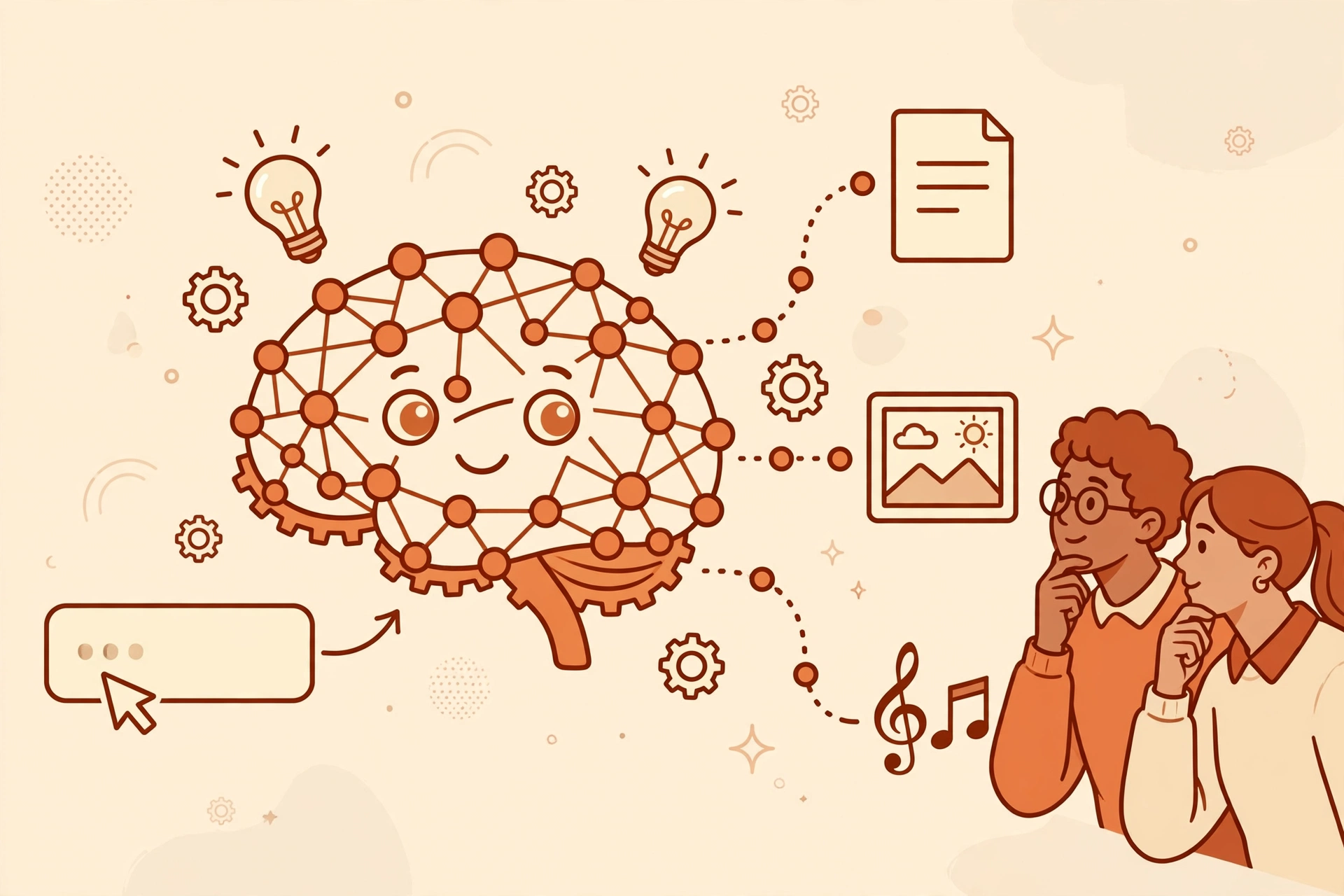
It doesn't copy from a library. It predicts, one piece at a time.
You have seen the phrase everywhere: generative AI. It sounds technical, but the idea is simple — and once you get it, tools like ChatGPT and image generators stop feeling like magic and start feeling like machinery you can use well.
The one-sentence version
Generative AI is a system trained on huge amounts of existing text, images, or sound that learns the patterns in them — then creates new content by predicting what should come next, one small piece at a time.
Predicting the next word — at enormous scale
When ChatGPT writes a sentence, it is not looking up an answer in a database. It asks, billions of times: 'given everything so far, what is the most likely next word?' Each answer is fed back in, and the next word is predicted again. Do that fast enough, with a model trained on much of the public internet, and the result reads like reasoning. Sometimes it even is a kind of reasoning — and sometimes it is fluent guessing, which is why checking facts still matters (more on that below).
The same trick, for images and video
Image generators learned from millions of photos paired with descriptions. Ask for 'a red bicycle at sunset' and the model builds the picture gradually — starting from visual noise and refining it toward something that matches your words and looks like the photos it learned from. Video tools extend the same idea across frames; voice tools predict the next slice of sound. Different outputs, one family of ideas.
Three words worth knowing
- Model — the trained system itself (for example, the model behind a chatbot). Think of it as the brain after years of study.
- Prompt — your instruction. The quality of the prompt steers the quality of the output, which is why our prompt guide exists.
- Training data — the books, websites, images, and recordings the model learned patterns from. This is why models know a lot about popular topics and can be shakier on rare ones.
Why it sometimes invents things confidently
Because prediction is not the same as knowledge. If the most likely next words form a plausible-sounding date, name, or quote, the model may produce it even when it is wrong. Researchers call these errors hallucinations. The fix is old-fashioned: verify important facts with a source you trust — tools like Perplexity help because they show their sources.
What generative AI is genuinely good at
- First drafts — essays, emails, lesson plans, scripts: beating the blank page.
- Transformation — summarising, translating, simplifying, changing tone.
- Variation — ten headline options, three worksheet levels, five activity ideas.
- Explanation on demand — the same topic explained for a child, a parent, or an expert.
Generative AI doesn't know things the way you do. It has read more than anyone alive and understood it differently — brilliantly useful, occasionally wrong, always worth checking.
If this clicked, the natural next step is hands-on: pick one free tool from our free tools list and give it a real task from your week. Understanding follows use.
Keep reading
AI Explained
What Is Machine Learning? A Plain-English Explanation
No math, no jargon: how machines actually learn — and why your chatbot sometimes invents things with complete confidence.
How-To Guides
5 AI Tools That Save Teachers 5 Hours a Week — With Real Classroom Examples
Lesson plans in 10 minutes, worksheets at three levels, and parent messages that write themselves. A practical workflow for busy teachers.
AI Tools
12 Best Free AI Tools in 2026 — No Credit Card Needed
You don't need a subscription to start with AI. Twelve free tools for writing, images, research, voice, and video — honestly rated.